

 Sarah Monni
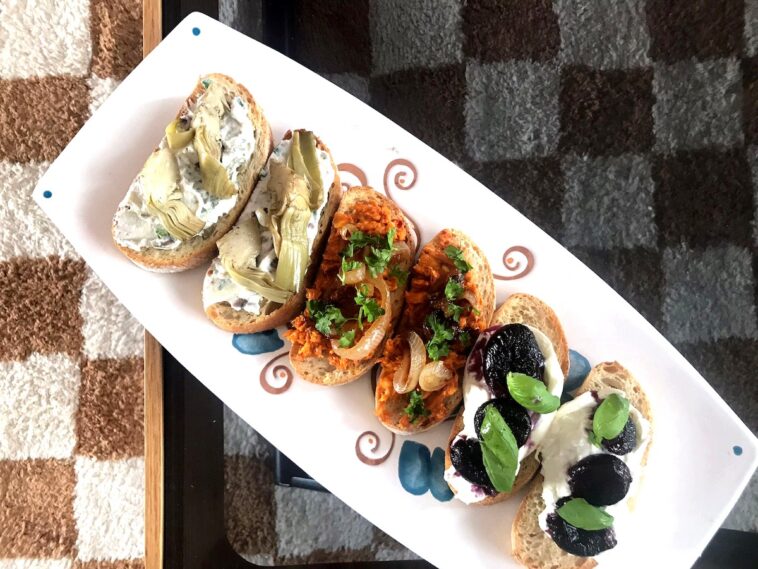
Guests over, or just fancy a delicacy with you appetizer? Bruschetta always does well. The crispy sandwich with toppings that is more often pronounced incorrectly than correctly (say broesketta, not brosjetta) tastes extra delicious on a sunny day. This year the summer didn't start well, but hopefully the sun will show itself more often in the coming months. I share a recipe for 3 different types of bruschette that are very suitable to enjoy in your garden or on your balcony!
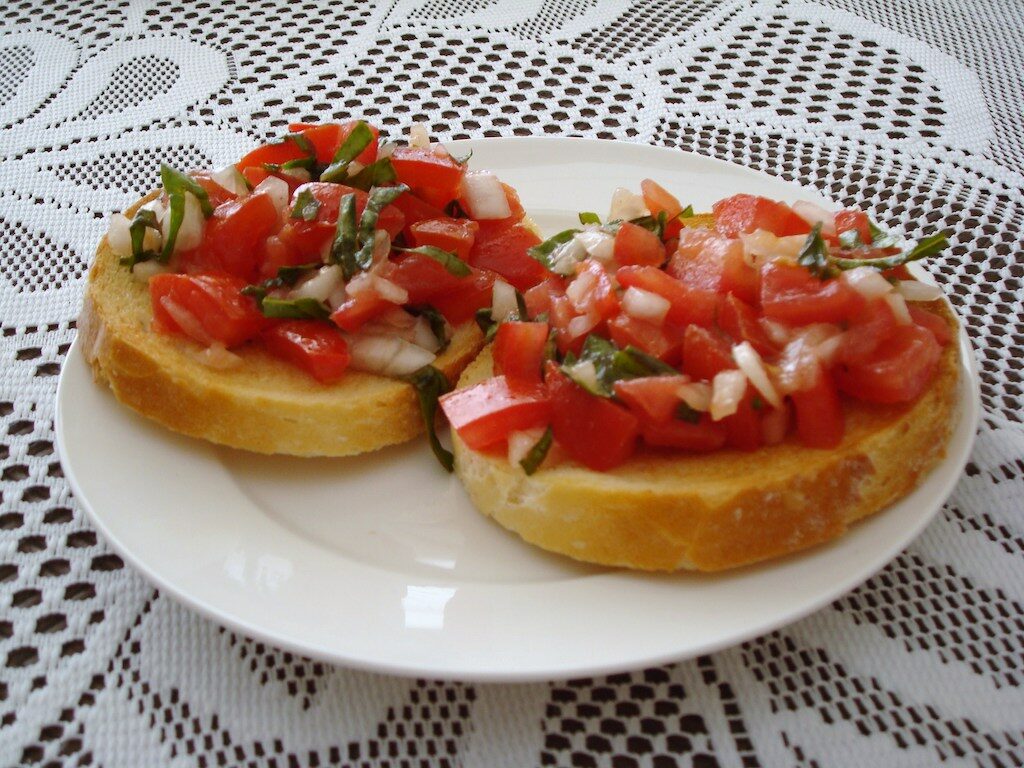
A crispy piece of bread covered with juicy tomatoes, basil and a drizzle of olive oil. This image quickly comes to mind when you think of bruschetta. The origins of bruschetta lie in the peasant cuisine of Central Italy, particularly in the regions of Lazio, Umbria and Tuscany.
A piece of history
The word 'bruschetta' comes from the Roman word 'bruscare', which means 'to roast over coals'. This cooking technique was used to revive old bread and make it edible again.
After toasting, the bread was rubbed with garlic and drizzled with olive oil, which formed the basis of today's bruschetta. In some regions tomatoes, salt and spices were also added, depending on what was available in season.
Over time, bruschetta changed into a refined starter. After the introduction of tomatoes in Europe, they became an indispensable ingredient in Italian cuisine.
The classic recipe with tomatoes, basil, garlic and olive oil became more popular. Bruschetta developed from a simple snack for farmers to a popular snack appetizer served in trattorias and restaurants throughout Italy and worldwide.
Endless options with bruschetta
The classic bruschetta recipe is of course delicious. I won't get tired of it anytime soon. But in my opinion, only preparing bruschetta with tomatoes is a missed opportunity: you can vary it endlessly. There is actually almost nothing you cannot put on a piece of toast. Cheese, meats, fish, vegetables, fruit. If you want to get really crazy, you could even use sweet toppings like Nutella. In that case, it might only be more suitable for dessert or breakfast.
Bruschetta or crostini?
When is something bruschetta, and when do you call it crostini? There is sometimes confusion about this. I don't blame anyone for that, because they are both toasted sandwiches with toppings on them.
The difference? First of all, crostini are traditionally made with smaller bread such as ciabatta, and bruschetta with larger bread. Bruschettes are also brushed with olive oil before roasting, and crostini afterward.
Secretly my recipe also falls under crostini, because I used ciabatta. I did rub the bread with olive oil before toasting. Whatever you call it, it is a mouth-watering starter.
Ingredients for the bruschette trio

Appetizer for 4 persons
- 1 ciabatta (or other bread of your choice)
- olive oil
- 2 garlic cloves
- pinch of salt
Burrata and roasted grapes
- 1 ball burrata
- handful of basil
- 100 grams of (seedless) red grapes
Nduja butter and caramelized onion
- 30 grams of Nduja
- 90 grams of butter (60 for the nduja butter, 30 grams for the onions)
- 2 onions
- handful of parsley
Ricotta, anchovies and artichoke
- 100 grams ricotta
- 40 grams of anchovies
- dash of lemon juice
- 8 artichoke hearts in olive oil
Preparedhing of the bruschette
- Start by making the caramelized onion. This one takes a little longer to prepare. First cut the onions into thin, equal rings.
- Heat 30 grams of butter and a dash of olive oil in a pan.
- Add the onions and fry briefly over medium heat. Then lower the heat and put a lid on the pan if necessary. Stir regularly and fry the onions for a maximum of half an hour in total.
- While the onions are simmering, preheat the oven to 200°C.
- Place the grapes (without bunch) in an oven dish and sprinkle with some olive oil.
- Place the grapes in the oven and roast for at least 20 minutes.
- Cut the bread into equal slices. Make sure you have at least 12 slices.
- Crush the garlic finely and mix with a generous dash of olive oil and a pinch of salt.
- Brush the slices of bread with the olive oil mixture.
- Place the rolls spread out on the oven rack and bake for at least 5 minutes. Keep a close eye on when they are ready. When they start to turn a golden brown color and are hard on the outside but still a little soft on the inside, they are just right.
- Mix the nduja and butter until combined for the nduja butter.
- Also mix the ricotta, lemon juice and anchovies, preferably with a food processor to grind the anchovies slightly.
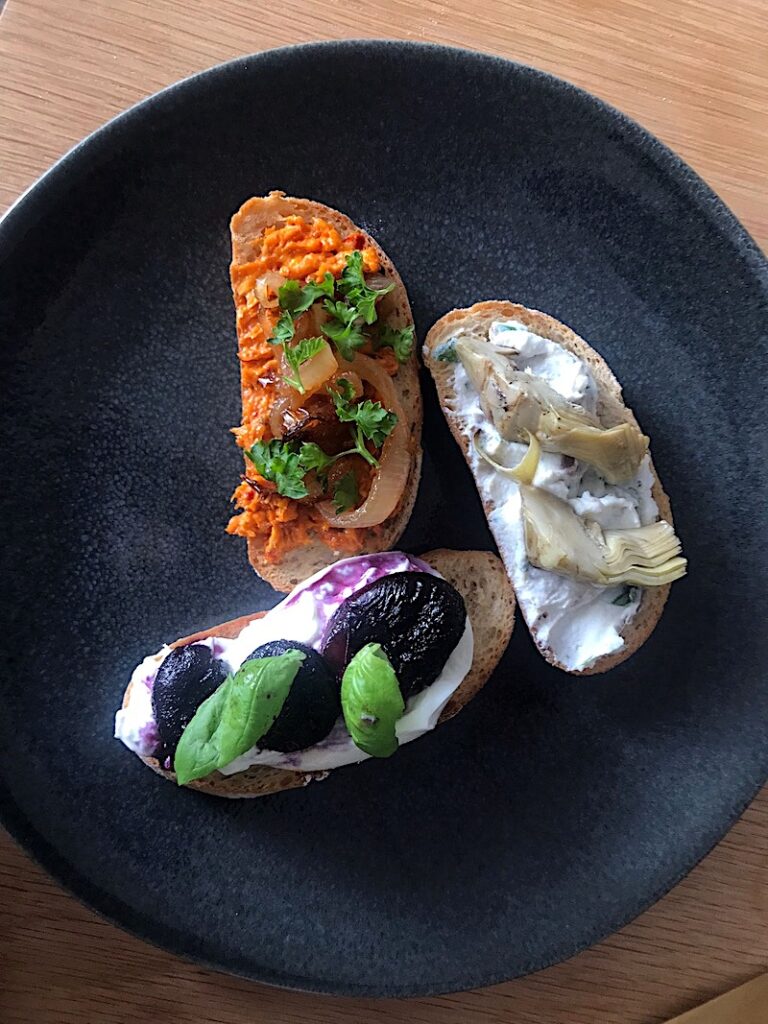
- Let the rolls cool slightly and then top with the burrata, roasted grapes and basil, the anchovy-ricotta mixture and the artichokes, and the nduja butter, onions and parsley. Buon appetito!
Unpack with antipasti
These bruschettes are a good example of an antipasto to serve yourself or guests during lunch or dinner.
But do you really want to go all out, for example for a party? Put the bowl with liver sausage and cubes of cheese aside and treat friends and family to Italian snacks. In addition to this recipe, This is Italy has a lot more inspiration for you, for example: these Italian starters. Success guaranteed!








Comments